
@ Virginia State University
A research center dedicated to the development of human-centered and culturally contextualized AI
About us
At Kafou AI Research Laboratory (KARL), we stand at the crossroads of disciplines and perspectives, developing innovative approaches to Artificial Intelligence that are human-centered, culturally contextualized, and grounded in the vast, untapped well of diverse human knowledge and experience that has yet to shape how AI is built and understood.
Our Mission
KARL's mission is to reimagine the foundations of Artificial Intelligence. Expanding the boundaries of what AI can be, who it serves, and whose knowledge shapes it. We are committed to building AI that is responsible, equitable, and deeply grounded in the full spectrum of human experience, culture, and ways of knowing. By bringing together researchers across disciplines, communities, and perspectives, we work to ensure that the most overlooked voices and knowledge systems are not just included in AI but centered in it.
Learn more about our Research Pillars
Our lab operates out of computer science department at Virginia State University is under the direction of Dr. Cesa Salaam and acts as his primary research center.
KARL's research is organized around seven interrelated pillars:
Responsible AI
We investigate the ethical dimensions of AI development and deployment, examining questions of fairness, accountability, transparency, and harm. Our work moves beyond compliance toward a deeper reckoning with what it means to build AI that is genuinely good for people and societies


AI Governance & Policy
We develop technical and policy frameworks for governing AI systems at communal, institutional, national, and global levels. Our research bridges the gap between technical realities and governance needs, equipping decision-makers with the tools to shape AI responsibly.
Culturally Contextualized AI
We research how culture, language, and lived experience shape the way humans interact with and are affected by AI systems. Our work challenges the assumption of universality in AI design and advances approaches that are adaptive, pluralistic, and locally meaningful.


Indigenous & Community Centered AI
We explore how Indigenous knowledge systems, epistemologies, and ways of knowing can inform and transform AI development. This pillar centers communities that have historically been excluded from technological systems and asks what AI could look like if it were built outward from their perspectives.
Natural Language Processing & Human Communication
We advance research in NLP with a particular focus on linguistic diversity, low-resource languages, and the cultural richness embedded in human communication. We believe language is not just data, but a living expression of identity, knowledge, and worldview.

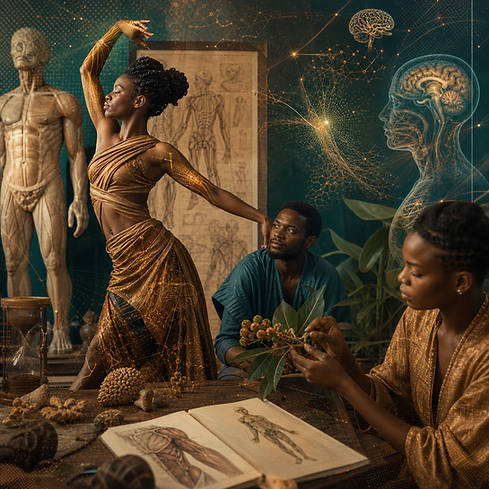
Biological & Embodied Intelligence
We explore what AI can learn from the full range of biological and embodied experience, examining cognition, perception, and intelligence beyond the narrow frame of human-computer interaction. This pillar asks what overlooked forms of intelligence and experience might unlock entirely new paradigms for how AI is conceived and built.
New Frontiers in Artificial
Intelligence
We research the frontiers of Artificial Intelligence that are poised to change the future of technology.

Meet The Team

Cesa Salaam, Phd
Lab Director and Lead Researcher

I am Dr. Cesa Salaam, an Assistant Professor of Computer Science at Virginia State University and Director of the Kafou AI Research Lab. My research focuses on culture in AI, responsible and trustworthy AI, bias mitigation, natural language processing, and AI governance. I am especially interested in how AI systems reflect values, behaviors, decision processes, and experiences, and how these systems can be designed to better serve culturally diverse communities.
My work brings together computer science, ethics, cultural analysis, and community-centered approaches to build AI systems that are more fair, contextual, and accountable. Through my research, teaching, and mentorship, I aim to expand who participates in AI development and to advance technologies that support equity, representation, and human flourishing.